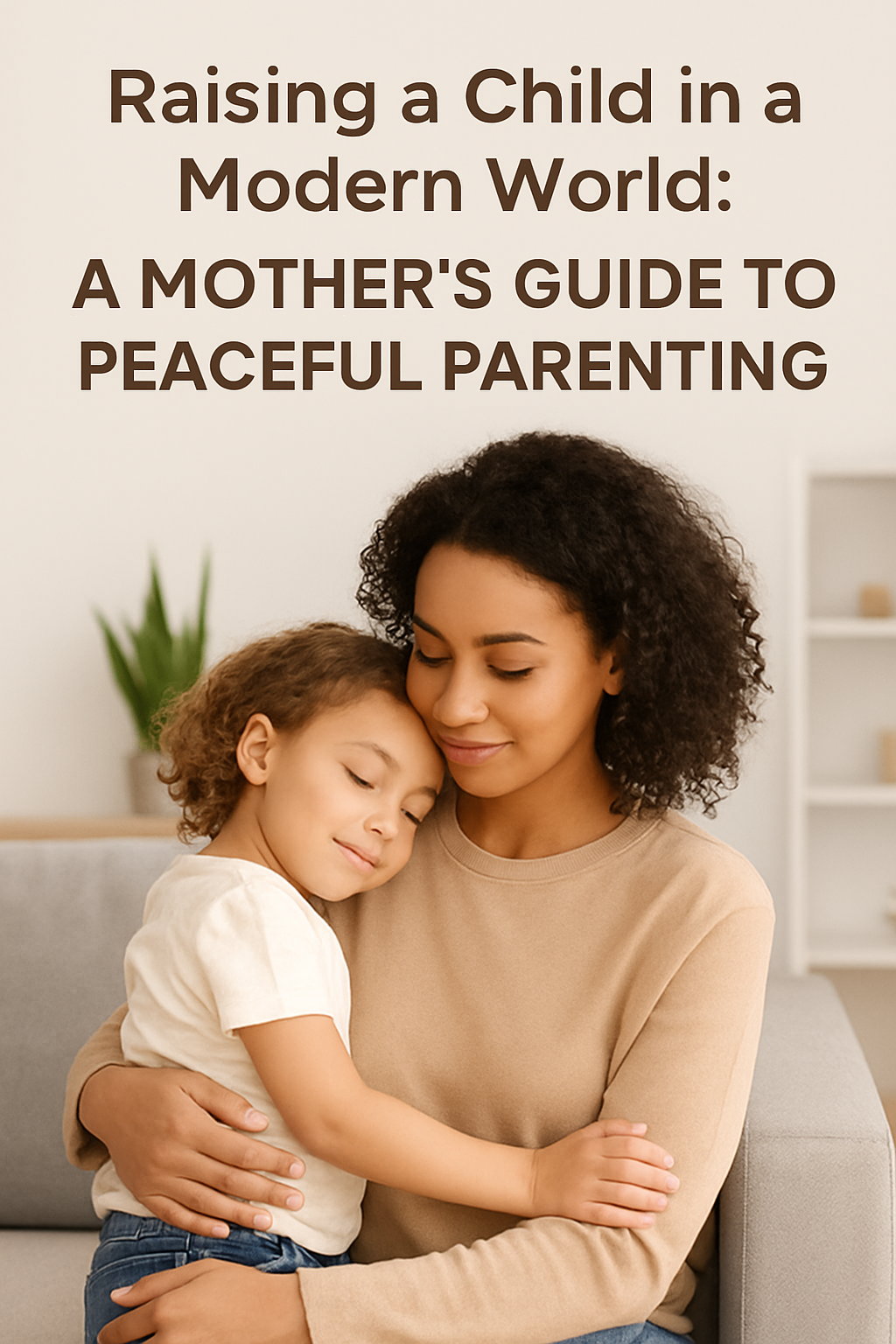
The modern world is fast, noisy, unpredictable, and constantly changing. Every day, new technologies appear, new no parenting debates pop up online, and new pressures fall on the shoulders of mothers. Our children are growing up in a world very different from the one we knew, and as mothers, we often feel the weight of raising confident, emotionally balanced, and responsible children in such a complicated environment.
But here’s the truth:
You don’t need to be a perfect mother to raise a good child.
You just need to be a peaceful one.
Peaceful parenting is not about controlling your child.
It is not about raising a child who never makes mistakes.
It is about raising a child who feels understood, supported, and safe to grow.
This guide walks you through what peaceful parenting means, why it matters in today’s world, and how you can practice it every single day—no matter your background, culture or parenting experience.
1. Understanding Peaceful Parenting in the Modern World
Peaceful parenting is a style of parenting focused on connection instead of control.
At its core, it is built on three principles:
1. Connection
Your relationship with your child is the foundation of their behaviour. When a child feels understood, they behave better, communicate more clearly, and trust you more deeply.
2. Respect
Children may be small, but they are still people. They deserve respect, patience, and the freedom to learn at their pace.
3. Guidance instead of punishment
Instead of reacting with yelling, anger, or threats, peaceful parenting teaches mothers to guide, teach, and correct with calm authority.
In a world filled with pressure from social media, academic competition, and technology, peaceful parenting gives your child something priceless:
a home that feels safe.
When the world becomes overwhelming, your child should see you as their anchor not their fears
2. Why Peaceful Parenting Matters More Than Ever
The modern world introduces challenges older generations never dealt with. Let’s look at a few:
1. Technology has changed childhood completely
Children today have smartphones, tablets, online classes, and screens everywhere. While technology can support learning, it can also create:
shorter attention spans
social comparison
pressure to “fit in”
exposure to inappropriate content
increased stress and anxiety
Peaceful parenting creates balance. It helps your child build the emotional maturity needed to use technology without losing themselves.
2. Children face more emotional pressure today
From school expectations to peer pressure, children carry quiet burdens they don’t always know how to express.
A peaceful parent teaches their child:
how to talk about feelings
how to manage stress
how to handle rejection or mistakes
how to believe in themselves
3. Global culture affects children from every country
Whether you live in the UK, Nigeria, the US, or anywhere else, children today are exposed to global trends. This exposure shapes:
their lifestyle
their identity
their values
their ambitions
A peaceful parent provides clarity and guidance, helping the child build their own values with confidence.
4. Parents themselves are stressed
Let’s be honest motherhood in today’s world comes with exhaustion, judgment, multitasking, and very little rest.
When a mother is overwhelmed, the home becomes overwhelmed too.
Peaceful parenting teaches the mother to slow down, regulate herself, and stay centered—because when a mother is calm, her child receives the best version of her.
3. Building a Peaceful Home Environment
A child becomes what they see and feel.
Here are ways to create a calm, supportive environment:
1. Start with your emotional stability
Children react more to your tone than your words.
A peaceful parent learns to:
pause before reacting
breathe during conflict
speak softly but firmly
stay consistent
Your calmness becomes their calmness.
2. Create predictable routines
Children feel safer when life feels structured.
Simple routines like:
bedtime
study time
screen limits
morning tasks
help a child understand expectations.
3. Reduce shouting and harsh reactions
Yelling may stop a behaviour in the moment, but it breaks trust in the long term.
A peaceful parent corrects with:
eye contact
a calm voice
short, clear instructions
natural consequences
4. Build emotional safety
Make your home a space where your child can say:
I don’t understand.
I made a mistake.
I’m scared.
I need help.
When your child knows you won’t react in anger, they hide less and communicate more.
4. Communication: The Heart of Peaceful Parenting
Peaceful parenting grows when communication improves.
- 1. Practice active listening
When your child talks:
stop what you’re doing for a moment
look at them
respond gently
A child who feels heard becomes a child who trusts.
2. Avoid dismissing their emotion instead of saying stop crying,It’s not a big deal.
Say i can see you are upset. Tell me what happened. This teaches emotional awareness.
3. Use positive language replace “Don’t run”
with“ Please walk slowly.”
Replace:
“You’re being stubborn.”
with
“Let’s try this another way.”
Words shape behaviour.
4. Apologize when you are wrong
Yes, mothers sometimes make mistakes too.
Saying “I’m sorry” teaches your child humility, empathy, and accountability
5. Discipline Without Fear
Discipline means teaching, not punishing.
Here is how peaceful parenting approaches discipline:
1. Set clear boundaries
Children need structure.
Explain rules ahead of time, not during anger.
2. Use natural consequences
If they spill their juice, ask them to help wipe it.
If they forget their homework, they experience the school’s consequence.
Natural consequences teach responsibility better than shouting.
3. Teach problem-solving
Ask:
“What can we do differently next time?”
“What lesson did you learn?”
This turns mistakes into learning.
4. Be consistent
If you set a rule, follow it.
Children behave better when boundaries don’t change every day.
6. Helping Your Child Navigate Modern Challenges
1. Technology and screen time
You don’t need to ban screens.
You only need to guide:
set time limits
monitor content
encourage offline hobbies
model healthy tech habits
2. Social media pressure
Help your child understand not everything online is real
self-worth is not measured by likes
comparison destroys confidence
3. Academic stress
Encourage effort, not perfection.
Say:I’m proud of how hard you tried,
instead of why didn’t you score higher?
4. Friendships and peer influence
Teach your child:
how to choose good friends
how to speak up for themselves
how to walk away from harmful behaviour
5. Cultural identity
Whether your child grows up in the UK, Africa, or the US, remind them of their roots.
Identity gives children strengths
7. Balancing Motherhood and Modern Life
A peaceful parent takes care of herself too.
Here’s how:
1. Don’t aim for perfection
Perfect mothers don’t exist, and your child doesn’t need one.
2. Take breaks without guilt
A rested mother is a better mother.
3. Build a support system
You need:
a friend you can talk to
a parent group
a community
Motherhood is not meant to be done alone.
4. Protect your mental and emotional health
Your child’s peace begins with your peace.
8. Raising a Confident, Kind, and Emotionally Strong Child
Children raised in peaceful homes grow into adults who communicate well
trust themselves
respect others
think before acting
stay calm in challenges
show empathy
build healthy relationships
manage stress better
This is the true reward of peaceful parenting
9. Practical Daily Habits for Peaceful Parenting
Here are simple actions to practice daily:
Hug your child every morning.
Say “I love you” often.
Eat at least one meal together
Ask, how was your day?
Laugh together.
Read together.
Acknowledge their effort.
Celebrate small achievements.
Keep promises.
Control your reactions.
These little things create big emotional security.
10. A mother’s final message of hope
If you are reading this, it means you are already trying your best.
And your best is enough.
You don’t need fancy parenting books or perfect routines.
You only need: love,patience,consistency and a peaceful heart
Children remember how we made them feel more than anything else.
In a noisy world full of stress, give your child what the world cannot ,a peaceful, loving home where they can grow into their strongest, kindest, most confident self.
Remember ,you are not just raising a child.
You are raising a future.
And with peaceful parenting, that future is bright.
#lifeofamom ,#raisingahappyfamily ,#inspiringandencouragingmoms